Downtime and OEE tracking for South African lines
Find the production hours you're already paying for.
One sensor times every stop. The operator says why. Each lost hour traces to its root and to who can win it back.
A sensor and a power supply per line. Live within 48 hours.
From R4,950 per line per month, ex VAT
Recreated screen of the Augos Operator Terminal on demo data, with a 5-minute stop threshold. Stop time is shown sped up.
A month, itemised down to the reason.
One measured month on one beverage line, biggest loss first. Open a loss to see what it was made of and who can win it back. Each hour is priced at your own cost per paid hour.
One line · one month
Measured412.3 h lost of 720 paid hours57.3% of paid time, in five accounts, biggest first
8.8 h of stops (45) were still waiting for a reason when the month closed and are not itemised here. The other 299.0 paid hours made good product at full speed.
Unplanned stops228.2 h31.7%
With the technician who accepted the call, with Augos Assist; else the operator logged in
With the operator logged in; the reason tree shows a supply problem
With the operator logged in
With the technician who accepted the call
With the operator logged in
Planned stops102.1 h14.2%
Planning for the time it allowed; the operator logged in for any overrun
An account of their own, traced to the operator and product
Net of a 0.4 h gain; reported by job and product
Rejects, counted as time; reported by job and product
Open a row marked ▸. In the platform every reason opens further, to machine, assembly, component and part, and down to the event log.
Augos platform, Performance Overview and Downtime Report · one anonymised beverage line · a 30-day month in 2026 · site, products and people removed.
Augos measures lines for food, beverage and milling, packaging and plastics, coatings, steel and building-products and automotive-parts manufacturers.
And for multi-site groups, contract packers and ERP users.








One record, three answers
Recover hours from the line you already have, before you spend on new machines.
Every stop on record
The line keeps time.
Start, stop, interruptions and speed come from the sensor with digital timestamps. Operators only name the stop, in a few taps, during it or after it.
How it works ›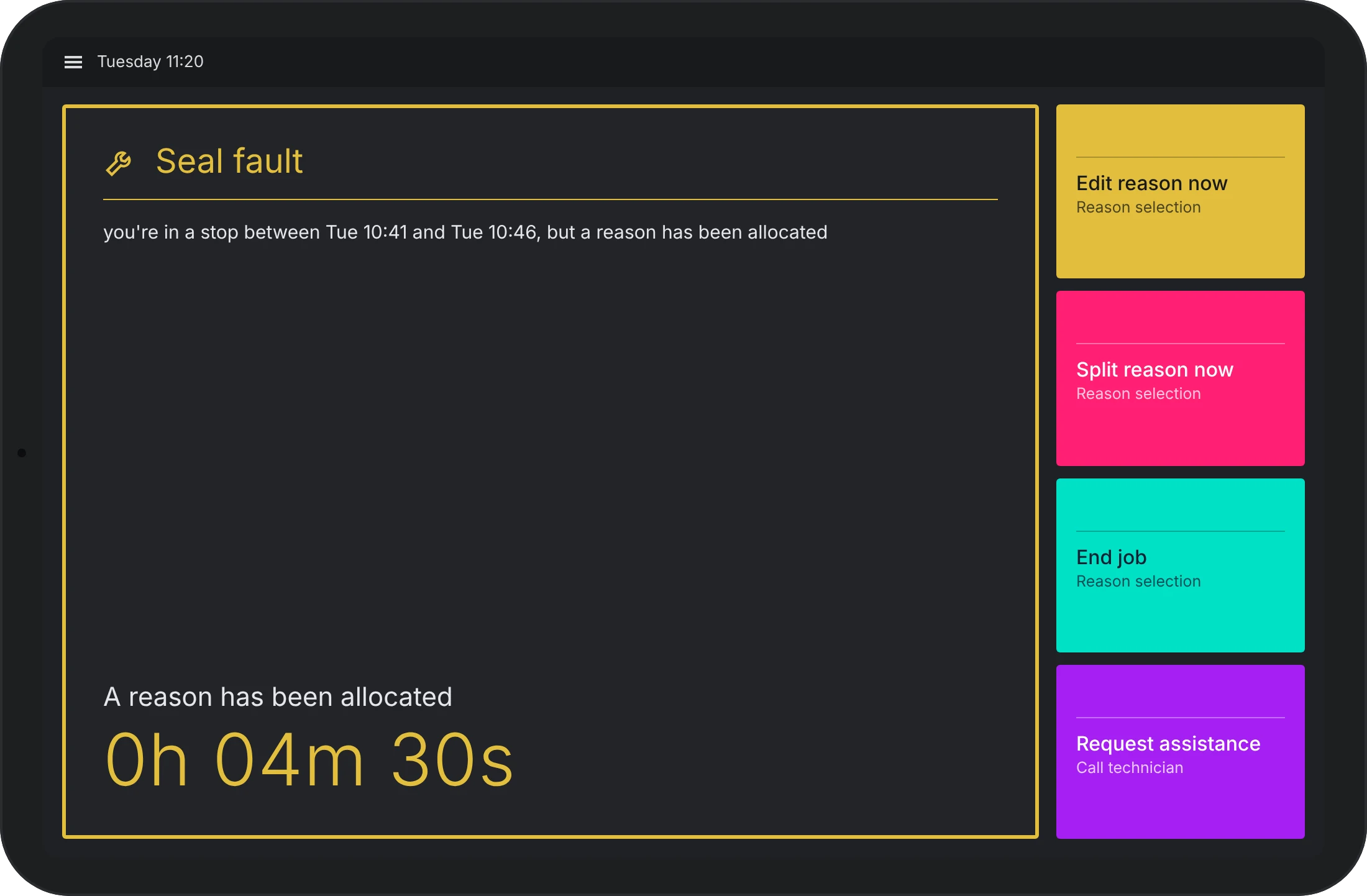
Who can win it back
Every lost hour has a name on it.
The operator logged in, the technician who took the call, or the time the plan allowed. One record settles the argument between production and maintenance. It shows the hours each side can recover, by person, event, job and product.
How each hour is attributed ›Recoverable hours
Targets from your own best.
Each stop reason is measured against your line's own recommended time, not a textbook 85%. Each hour is priced at your cost per paid hour.
See the formulas ›Recreated screen on demo data.
Proof
Three plants, three different lessons.
"The Augos system is providing me with live OEE data, that is essential to monitor my production performance in real-time, and also assist me to analyse what is causing inefficiencies and downtime."
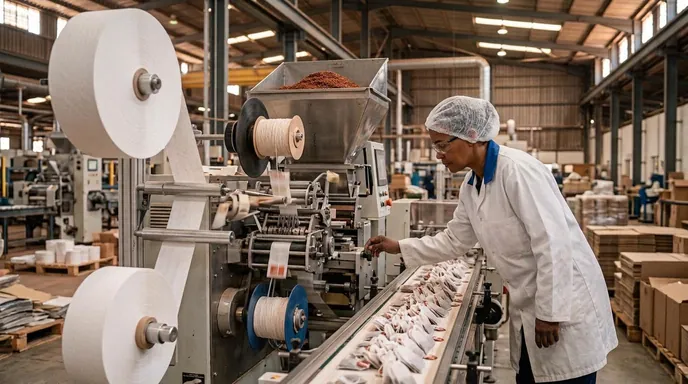
Tea packing · Western Cape
Three identical lines. One made half the output.
One fault code took 61.4 hours on line 2 in a month, and none on line 1.
Read the case ›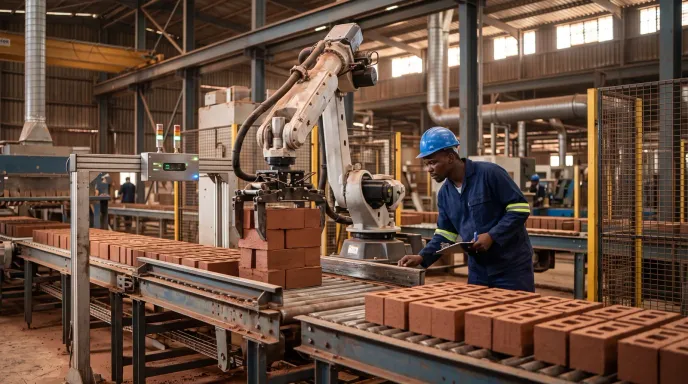
Clay bricks · Western Cape
The plant wrote its own breakdown report.
Two lines, 183.3 hours of breakdowns in a month, and the share two packing machines caused.
Read the case ›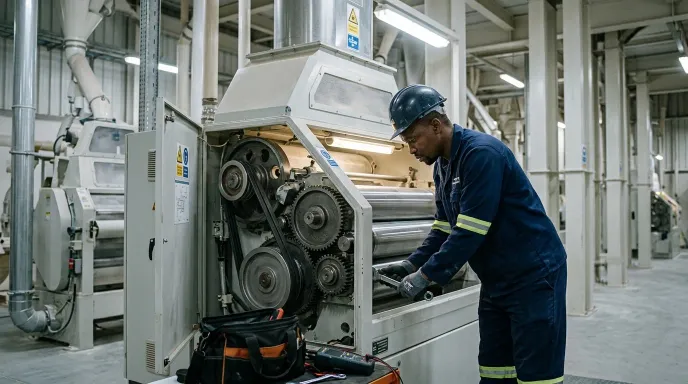
Flour milling · Gauteng
3,372 stops by symptom. 445 by part.
Over about two years, the mill changed how it recorded stops, one machine and asset at a time.
Read the case ›Getting started
Live within 48 hours of your kit arriving.
Fill in one workbook, give us a power supply by the bottleneck and mount the sensor and terminal. We switch them on over the air, and operator training follows.
Questions plants ask first
Before you book.
Will operators have more paperwork?
Less. The sensor records every start, stop and interruption. Operators pick the reason from your own list on the terminal, during the stop or after it, which replaces the shift-end log.
Can the numbers be trusted?
Yes. Counts, run time and stops are measured on the line and timestamped; every total opens to the events behind it. Speeds, product units and costs are your settings, checked with you at go-live and every quarter.
What does it take to install?
A power supply near the bottleneck, and one sensor and one terminal mounted by your team with our guidance. 4G is built into the terminal, with a data SIM at no cost, so it needs nothing from your plant network. Once the kit arrives and the workbook is complete, we switch it on over the air and it is live within 48 hours. Operator training follows.
Does it work with our ERP?
Yes. Scheduled jobs can be sent to the terminal through the Augos API, so operators pick a preloaded job, and your ERP pulls the results back. Your data comes out through Excel, CSV and an open API.
What does it cost?
R4,950 per line per month, ex VAT, plus R19,500 once per line for deployment. Every line starts with a three-month paid pilot: R34,350, ex VAT. See pricing ›
See a month of your own kind of line.
Thirty minutes with a manufacturing specialist, on one of your lines and your own stop list.
- Your products, your stop reasons, your shifts
- Where the paid hours went, and who can win them back
- Prices in rand, ex VAT, per line
A manufacturing specialist replies within two business hours to set a 30-minute call.